Desh Bandhu Jan Utkarsha Pariyojana:
A catalyst for community transformation
Lupin Human Welfare & Research Foundation (LHWRF) piloted the Desh Bandhu Jan Utkarsha Pariyojana (DBJUP) to enhance the socio-economic status of the poorest of the poor households in rural areas with sustainable livelihood solutions. Operating in the districts of Dhule and Pune in Maharashtra and districts of Alwar and Bharatpur in Rajasthan, the DBJUP intervention has impacted 1150 households.
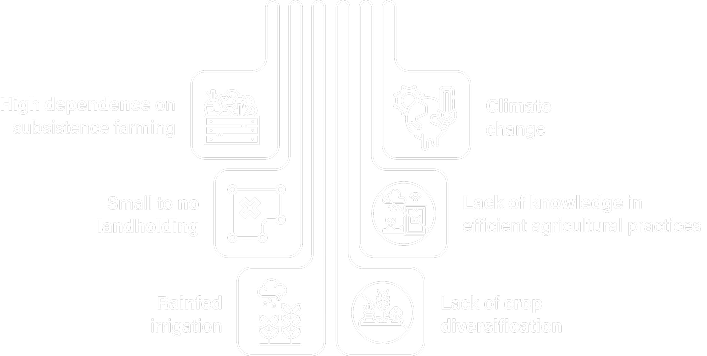
Key challenges in strengthening rural agriculture
Rural agriculture is constrained by systemic barriers, climate change impacts, limited access to formal credit, small landholdings, fragmented markets, resource-intensive practices, and poor crop diversification.
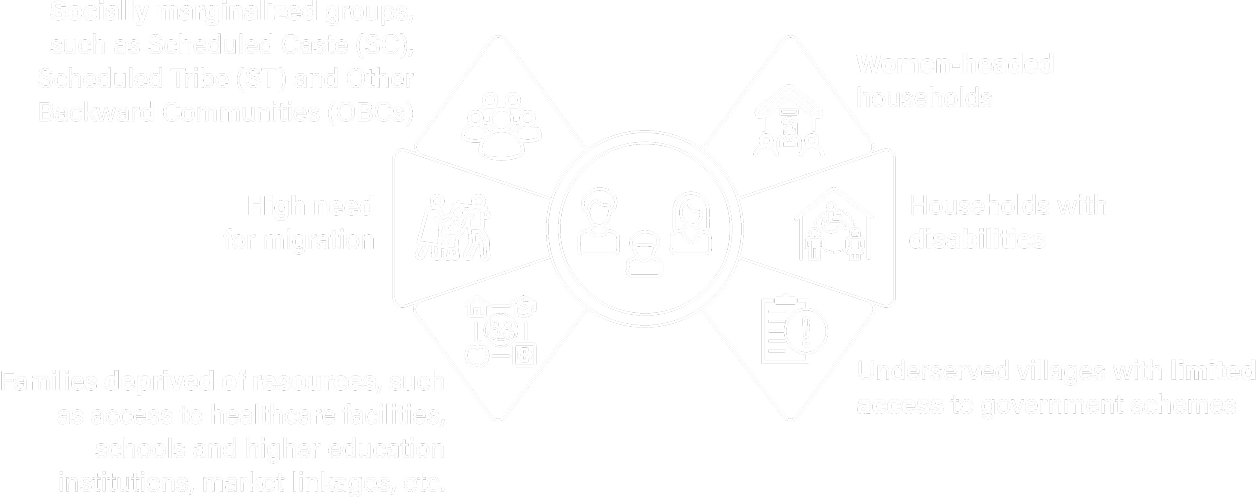
Criteria for identifying beneficiaries
DBJUP supports families by improving access to resources and providing handholding support. Livelihood enhancement activities were designed with the understanding that beneficiaries already had multiple income sources. Instead of a complete overhaul, the intervention focused on sustainably strengthening existing knowledge and skills to build on current practices and improve productivity.
DBJUP intervention models

Livelihood Model

Intervention Activities

Beneficiary Profile

Key Outcomes
Impact that transforms Lives